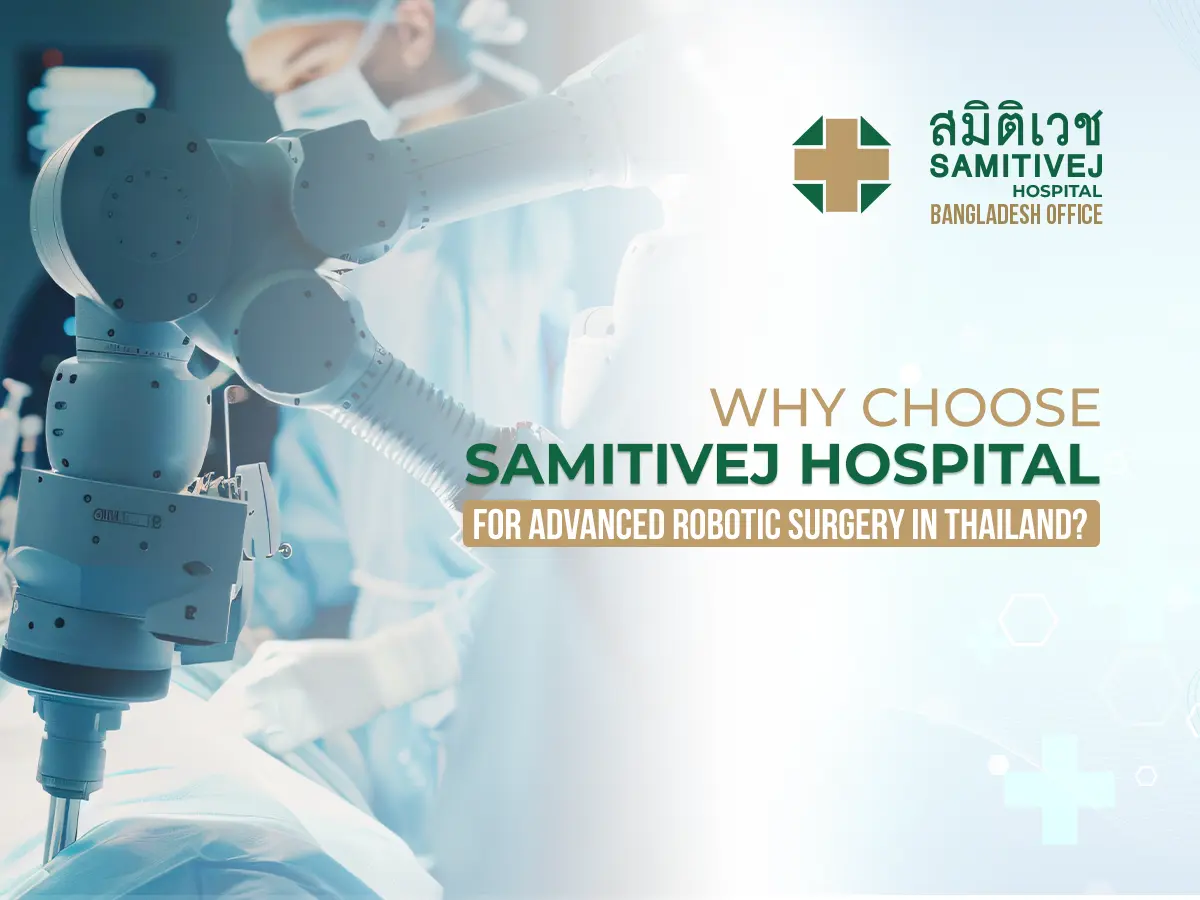
Robotic surgeries are some of the most complex procedures in the medical field. These surgeries require a unique level of precision, innovative equipment, and an advanced recovery pathway that not many hospitals can offer. Especially in Southeast Asia.
However, Samitivej Hospitals in Thailand definitely stands out for its robotic surgery facilities. The hospital leads in the region by offering minimally invasive operations through robotic assistance. In this guide, we discuss what makes Samitivej Hospital a leading hospital for robotic surgery in Thailand.
Why is Robotic Surgery A Complex Procedure?
Robotic surgery is complex because it combines cutting-edge technology, precise hand-eye coordination, and deep surgical expertise, all working together simultaneously, in real time.
Let’s look at how it works,
- Console control: The surgeon sits at a console away from the operating table and controls the robotic arms using hand and finger movements.
- 3D visualization: A high-definition camera sends a zoomed-in 3D image of the surgical area to the surgeon's screen, since there is no direct touch or view of the tissue.
- Instrument movement: The robotic arms convert the surgeon's hand movements into smaller, more precise motions inside the body, avoiding any natural hand tremors.
- Team coordination: Anesthesiologists, nurses, and technicians monitor the patient and equipment throughout the procedure, ready to respond the moment anything changes.
- Continuous adjustment: The surgeon constantly adjusts pressure, angle, and depth based on the visual feed, since there is no physical feedback from touch.
Each of these steps needs accuracy and split-second decision-making, which is why robotic surgery is only performed by hospitals with proper infrastructure, certified surgeons, and strict safety protocols in place.
Why Should I Choose Samitivej Hospitals for Advanced Robotic Surgery?
Samitivej Hospitals stand out for advanced robotic surgery in Thailand because they combine international accreditation, experienced surgeons, and the latest robotic technology under one roof.
Patients from Bangladesh and across the world choose Samitivej for the same reasons: proven surgical outcomes, transparent care, and a team built specifically around robotic-assisted procedures. Here is what makes Samitivej a trusted choice.
1. Samitivej Hospital is Internationally Accredited
Samitivej Hospital holds internationally recognized accreditation, including the gold-standard JCI accreditation, which confirms its facilities meet strict global standards for patient safety and surgical quality.
This accreditation covers every stage of care, from infection control to surgical protocols to post-operative monitoring. For patients traveling from abroad, this means the same safety standards followed in leading hospitals worldwide are applied at Samitivej.
Regular audits and reviews keep these standards in place, so patients can expect consistent, verified quality every time they undergo treatment, including robotic surgery.
2. The Hospital Uses Latest Robotic Surgery Technology
Samitivej Hospitals uses the da Vinci Xi robotic surgery system, one of the most advanced robotic platforms available for minimally invasive procedures. This gives surgeons a magnified 3D view of the surgical area, along with robotic arms that filter out natural hand tremors and move with greater precision than the human hand. It supports a wide range of procedures, including urology, gynecology, and general surgery, through small incisions instead of large open cuts.
Samitivej also offers MAKOplasty, a robotic-assisted system used specifically for joint replacement surgery, allowing for more accurate implant placement and better alignment.
Alongside these robotic systems, Samitivej Hospitals are equipped with 3 Tesla MRI, PET-CT, and other innovative diagnostic technology, supporting accurate diagnosis and treatment planning before surgery even begins.
3. Samitivej Children’s Hospital Offers Robotic Surgery for Children
The Samitivej International Children's Hospital offers robotic-assisted surgery and rehabilitation specifically designed for pediatric patients, an option not widely available in the region. The hospital's hybrid operating rooms blend surgery with real-time biplane imaging, enabling precision-guided procedures for complex conditions like congenital heart defects and hydrocephalus. This often results in smaller incisions and quicker recovery for young patients.
Beyond surgery, Samitivej also uses robotic-assisted rehabilitation, including HAL (Hybrid Assistive Limb) technology, to help children recover mobility after conditions like cerebral palsy or spinal cord injury.
For parents considering treatment abroad, this means children have access to the same level of precision and advanced technology as adult patients, delivered in an environment built specifically around pediatric care.
4. Robotic Surgery is Performed by Experienced and Specialized Doctors
Samitivej Hospital’s robotic surgery team consists of surgeons trained specifically in robotic-assisted techniques. Operating the da Vinci Xi system requires additional certification beyond standard surgical training. Surgeons must complete hands-on training programs and gain supervised experience before performing procedures independently, since the technique involves a completely different skill set from open or laparoscopic surgery.
This specialized training covers hand-eye coordination through the console, depth perception without direct touch, and precise control of the robotic arms in small spaces. Surgeons build this expertise over repeated cases, refining their technique with each procedure.
For patients, this means the person performing the surgery has proven, procedure-specific experience with the exact technology being used, not just general surgical skill with a new tool.
5. Samitivej Hospital Has A Multidisciplinary Care Team
Robotic surgery at Samitivej involves a full team working together, not just the surgeon operating the console. Anesthesiologists manage the patient's condition throughout the procedure, adjusting as needed based on real-time monitoring. Surgical nurses and technicians handle the equipment, prepare instruments, and assist with patient positioning, since accuracy at every stage affects the outcome.
A bedside assistant surgeon also stays close to the patient during the procedure, ready to change instruments or respond immediately if the primary surgeon needs support. This role is especially important in robotic surgery, since the lead surgeon operates a few feet away rather than standing directly over the patient.
Before surgery, this team coordinates with radiologists and other specialists to review imaging and finalize the surgical plan. After surgery, nurses and physiotherapists carry out this approach through recovery, tracking healing progress and adjusting care as needed.
6. Samitivej Hospital Offers Personalized Care for International Patients
Samitivej Hospital offers dedicated support for international patients, making the entire treatment process easier to navigate for those traveling from Bangladesh. The hospital's international patient center assists with appointment scheduling, treatment planning, and coordination between departments, so patients do not have to manage these steps on their own. Interpreters and multilingual staff are also available.
Before surgery, the care team helps patients by reviewing their medical history, conducting necessary tests, and explaining what to expect at each stage. This support reduces uncertainty for patients coming from abroad who may not be familiar with the hospital or healthcare system.
Together, these factors show why Samitivej stands out as a trusted choice for robotic surgery. From advanced technology and specialized surgeons to coordinated care teams and dedicated international patient support, every part of the process is built around patient safety and comfort.
7. What Are The Types of Robotic Surgery Available at Samitivej Hospital?
Samitivej Hospital offers robotic-assisted surgery across three main specialties: urology, gynecology, and general surgery, along with robotic joint replacement.
- Urology: Robotic surgery is used for prostate, kidney, and bladder conditions, with the da Vinci Xi system helping surgeons work precisely around nerves and blood vessels to support better functional outcomes.
- Gynecology: Procedures include hysterectomy, myomectomy for fibroids, and treatment for endometriosis, benefiting from smaller incisions and reduced tissue trauma.
- General surgery: Cases such as hernia repair and gallbladder removal use the robotic system, particularly when precision in tight spaces is needed.
- Joint replacement: Samitivej Sukhumvit offers MAKOplasty, a robotic-assisted system used for hip and knee replacement, allowing more accurate implant placement.
This range of applications means patients considering robotic surgery, whether for a general condition, prostate cancer, a gynecological procedure, or joint replacement, have access to the same advanced technology and experienced surgical team.
Why Should You Choose Robotic Surgery Over Traditional Surgery?
Robotic surgery offers several advantages for advanced treatment, besides traditional open surgery, mainly because of the smaller incisions and greater precision involved.
- Smaller incisions: Robotic surgery uses a few small cuts instead of one large incision, which means less scarring and a lower risk of infection.
- Less pain: Smaller incisions and reduced tissue damage often result in less post-operative pain compared to open surgery.
- Less blood loss: The precision of robotic instruments helps reduce bleeding during the procedure, lowering the need for blood transfusions.
- Shorter hospital stay: Patients typically recover faster after robotic surgery, allowing for an earlier discharge compared to open procedures.
- Faster return to daily life: With less trauma to the body, patients often resume normal activities sooner than they would after traditional surgery.
- Better precision near delicate structures: The magnified 3D view and steady robotic arms allow surgeons to work more accurately around nerves, blood vessels, and organs.
These benefits explain why robotic surgery has become a preferred option for patients seeking effective treatment with a smoother recovery process.
Final Thoughts
Choosing where to have robotic surgery is a significant decision, and Samitivej Hospital offers the technology, expertise, and support system to make that choice easier. From the da Vinci Xi system to a coordinated multidisciplinary team, every part of the process is designed around patient safety and better outcomes.
For Bangladeshi patients, the Samitivej Hospital Bangladesh Office adds another layer of ease, guiding you through appointments, travel, and admission so you can focus on your health rather than logistics.
FAQs
Yes. The Samitivej Hospital Bangladesh Office assists with doctor appointments, medical visa processing, hospital admission, and travel coordination, helping patients arrange robotic surgery at Samitivej Hospital smoothly from consultation through recovery. Visit the office located at House No. 105, Road 13/A, Block C, Banani, or call
+880 133 253 8535 for a free consultation.
Yes, robotic surgery is safe when performed by trained surgeons at accredited hospitals. The surgeon controls every movement of the robotic arms at all times, and the system does not act on its own.
Recovery time depends on the procedure, but most patients experience shorter hospital stays and faster healing compared to open surgery, often returning to normal activities within a few weeks.
Candidacy depends on your specific condition, medical history, and the type of procedure needed. A consultation with a specialist at Samitivej Sukhumvit will confirm if robotic surgery is right for you.
Robotic surgery can cost more due to the technology involved, but for international patients, treatment in Thailand is often more affordable than similar procedures in the US, UK, or Australia.
Samitivej Hospital offers robotic-assisted surgery for urology, gynecology, and general surgery conditions, along with robotic joint replacement through MAKOplasty.
Samitivej's international patient center assists with consultations, medical visa guidance, travel coordination, and follow-up planning, making it easier for Bangladeshi patients to prepare for treatment abroad.
Yes. Samitivej Children's Hospital offers robotic-assisted surgery and rehabilitation, including HAL robotic gait training, alongside hybrid operating rooms for precision-guided pediatric procedures in cardiology, neurosurgery, and other complex conditions.